Summary:
Silicon carbide powder (SiC powder) is one of the most widely used industrial abrasive materials due to its extreme hardness, thermal stability, and cutting efficiency. From coarse 220 grit silicon carbide powder for heavy grinding to ultra-fine 1500 grit silicon carbide powder for precision lapping, different grades serve different industrial purposes. In this article, we explore silicon carbide powder uses, grit size selection, green vs black SiC powder differences, pricing factors, and how to choose reliable silicon carbide powder suppliers.
What Is Silicon Carbide Powder?
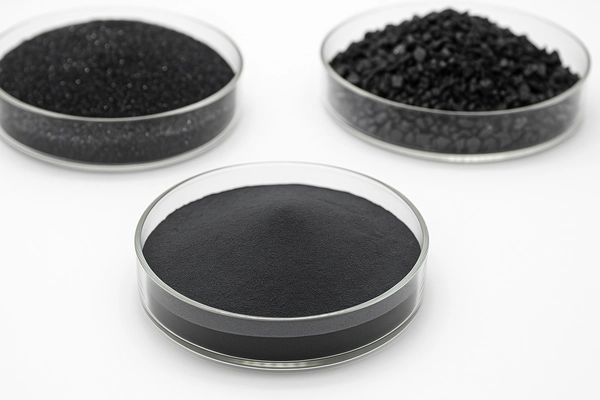
Silicon carbide powder, commonly referred to as SiC powder , is a synthetic abrasive material produced by reacting silica sand and carbon at high temperatures in an electric resistance furnace. The result is a crystalline compound with a hardness close to diamond, making it ideal for aggressive cutting and precision surface finishing.
Because of its sharp grain structure and high thermal conductivity, silicon carbide abrasive powder is widely used in grinding wheels, sandpaper, blasting media, refractory materials, and lapping applications.
Green vs Black Silicon Carbide Powder
One of the most common questions buyers ask is whether to choose green silicon carbide powder or black silicon carbide powder.
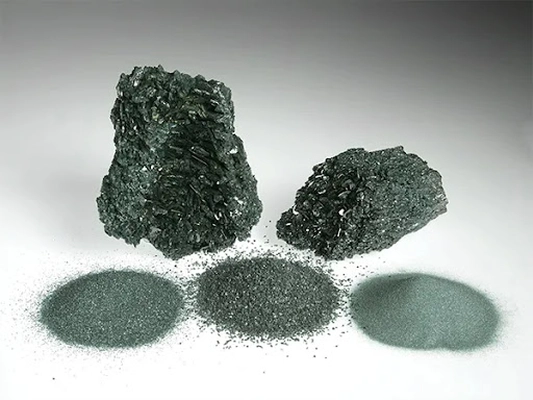
Green Silicon Carbide Powder
Green SiC powder is produced with higher purity levels (typically above 99% SiC). It features sharper crystals and better cutting performance, making it suitable for:
- Precision lapping
- Ceramic processing
- Optical glass polishing
- Semiconductor-related applications
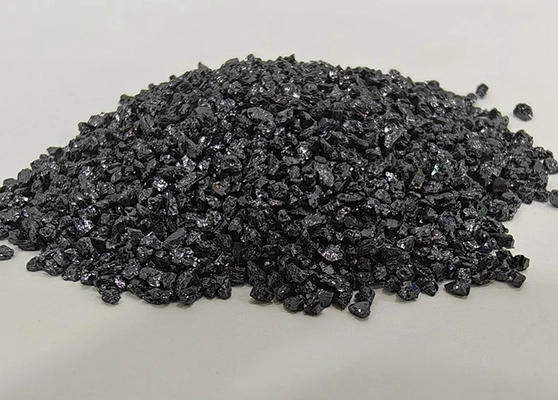
Black Silicon Carbide Powder
Black SiC powder has slightly lower purity but offers excellent durability and cost-effectiveness. It is commonly used for:
- Metal grinding
- Surface preparation
- Sandblasting
- Refractory production
In most general industrial applications, black silicon carbide powder provides a balanced combination of performance and price.
Understanding Grit Sizes: From 220 to 1500 Grit
Grit size determines how aggressively the powder cuts and how smooth the finished surface will be.
220 grit silicon carbide powder is typically used for heavy material removal and surface cleaning.
400 grit silicon carbide powder provides intermediate finishing for metal and stone surfaces.
600 grit silicon carbide powder is widely used for fine finishing and polishing preparation. Many buyers specifically search for silicon carbide powder 600 grit because it represents a practical balance between cutting speed and surface smoothness.
For higher precision applications:
- Silicon carbide 1000 grit powder is used for detailed polishing.
- 1200 grit silicon carbide powder is suitable for fine lapping.
- 1500 grit silicon carbide powder delivers ultra-fine finishing results.
When selecting grit size, it is important to match the particle size with the required surface roughness and production efficiency.
Silicon Carbide Powder Uses
Silicon carbide powder uses vary widely across industries. Its versatility makes it a key material in multiple sectors.
- Abrasive wheel manufacturing
- Coated abrasives (sandpaper production)
- Blasting and surface cleaning
- Silicon carbide lapping powder for precision finishing
- Refractory additives
- Metal polishing and deburring
Because of its thermal resistance, SiC powder performs particularly well in high-temperature and high-speed grinding environments.
Silicon Carbide Lapping Powder and Precision Applications
Silicon carbide lapping powder is commonly used in slurry form for precision machining. When mixed with oil or water, it creates a controlled abrasive suspension that removes microscopic surface irregularities.
Industries that frequently use lapping-grade SiC powder include:
- Automotive component finishing
- Mechanical seal production
- Optical glass processing
- Advanced ceramics manufacturing
Uniform particle distribution is critical in these applications to ensure consistent surface quality.
High Purity and Nano Silicon Carbide Powder
High purity silicon carbide powder is required in applications where contamination must be minimized, such as advanced ceramics and electronic materials.
Silicon carbide nano powder, with particle sizes in the nanometer range, is used in specialized applications including composite reinforcement, advanced coatings, and research materials. Due to its complex production process, nano SiC powder typically carries a premium price.
What Affects Silicon Carbide Powder Price?
Silicon carbide powder price depends on several factors:
- Purity level (green vs black)
- Grit size classification accuracy
- Order quantity
- Packaging requirements
- Freight and export costs
For example, sic powder price for bulk industrial quantities is significantly lower per kilogram compared to small retail packaging.
When comparing silicon carbide powder suppliers, ensure that chemical composition and particle size standards are clearly specified. Price comparisons without technical alignment can be misleading.
Where to Buy Silicon Carbide Powder
If you are looking to buy silicon carbide powder, you have several options:
- Industrial silicon carbide powder suppliers (bulk orders)
- Regional sic powder suppliers with local inventory
- Retail platforms offering small quantities
Some buyers search for silicon carbide powder for sale through hardware retailers (for example, queries such as silicon carbide powder bunnings). However, industrial users typically require consistent quality, technical documentation, and stable supply capacity that professional manufacturers can provide.
Handling and Safety: Silicon Carbide Dust
Like any fine powder, silicon carbide dust should be handled with proper ventilation and protective equipment. Industrial environments usually implement dust collection systems to maintain safe working conditions.
Conclusion
Silicon carbide powder remains one of the most efficient and versatile abrasive materials available today. Whether you require 220 grit silicon carbide powder for aggressive grinding, 600 grit silicon carbide powder for finishing, or 1500 grit silicon carbide powder for precision polishing, selecting the correct grade is essential for performance and cost control.
Understanding purity differences, grit selection, application requirements, and supplier reliability will help ensure long-term production stability and consistent surface quality.