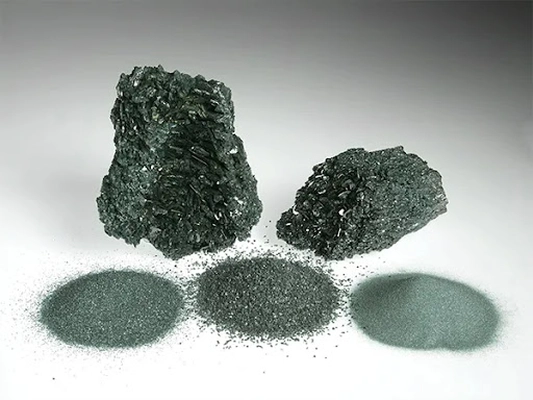
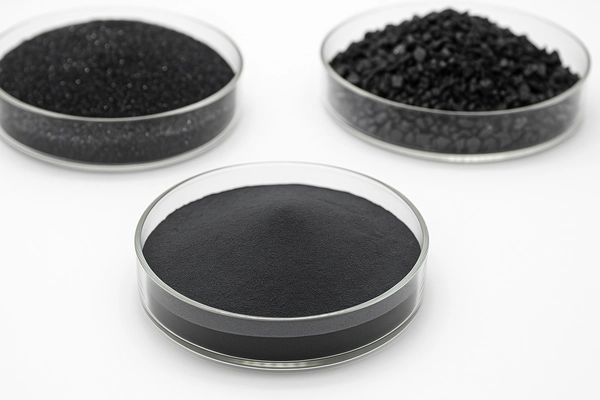
Quick Answer: Silicon Carbide (SiC) is a synthetic material made from silicon and carbon. It is known for its high hardness, thermal conductivity, and resistance to wear. Silicon carbide is available in different forms, notably silicon carbide powder and silicon carbide grit, which are used in various applications such as grinding, polishing, and sandblasting. These two forms differ in particle size and their corresponding uses, which will be explored in this article.
What is Silicon Carbide?
Silicon Carbide (SiC) is a highly durable compound made of silicon and carbon atoms. Due to its hardness (Mohs hardness of 9), high thermal conductivity, and electrical properties, it is used in numerous industries. Silicon carbide powder and silicon carbide grit are the two primary forms of this compound, each with unique properties and applications.
SiC is widely used in abrasive materials for grinding, polishing, sandblasting, and as a component in electronic devices. Its versatility makes it essential in applications ranging from the manufacturing of high-performance semiconductors to abrasive products used in industries like metalworking, automotive, and ceramics.
Silicon Carbide Powder vs Grit
Although both silicon carbide powder and silicon carbide grit are forms of silicon carbide, they differ significantly in terms of size, shape, and application.
Silicon carbide powder is made up of fine particles typically in the micron range. It is used for applications where precision is crucial, such as in polishing and coating processes. Its primary uses include fine grinding of metals, ceramics, and glass, as well as in coatings for cutting tools and other high-wear parts.
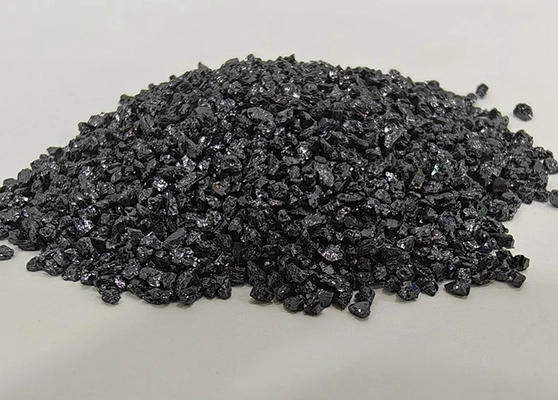
Silicon carbide grit, on the other hand, is coarser and used in more abrasive applications such as sandblasting, grinding, and polishing of rough surfaces. It is also used in manufacturing applications where a high material removal rate is needed, such as in the production of refractory materials or in heavy-duty metalworking.
The key difference is in the particle size—silicon carbide powder is much finer, while silicon carbide grit has a coarser, angular shape suitable for aggressive material removal.
Applications of Silicon Carbide Powder and Grit
1. Silicon Carbide Powder Applications
- Polishing and Finishing: Silicon carbide powder is ideal for polishing metals, ceramics, glass, and stones. It is used in precision polishing of cutting tools, lenses, and semiconductor wafers.
- Coatings: This powder is commonly used in hard coatings for tools and machine components that require high wear resistance, such as in the aerospace and automotive industries.
- Refractories: Used in the manufacturing of refractory materials that are designed to withstand high temperatures, such as furnace linings, kiln furniture, and high-temperature valves.
- Semiconductor Manufacturing: Silicon carbide is increasingly used in power electronics, particularly for the production of high-performance semiconductors due to its high thermal conductivity and ability to handle high voltages.
2. Silicon Carbide Grit Applications
- Sandblasting: Silicon carbide grit is highly effective in sandblasting applications, where it is used to clean and roughen surfaces of metals, stones, and ceramics.
- Heavy-Duty Grinding: It is widely used for grinding tough materials like steel, glass, and concrete in manufacturing and construction environments.
- Abrasive Blasting: Silicon carbide grit is commonly used in abrasive blasting, a method for cleaning and preparing surfaces, as well as for etching and stripping coatings.
- Metalworking: It is used in the production of grinding wheels and other abrasive tools for sharpening, polishing, and shaping metal parts.
Silicon Carbide Powder vs Grit: Parameter Comparison
| Parameter | Silicon Carbide Powder | Silicon Carbide Grit |
|---|---|---|
| Particle Size | Finer, typically in micron range | Coarse, grit range |
| Application | Polishing, coating, fine grinding | Heavy-duty grinding, sandblasting |
| Hardness | Hard, used for precise finishes | Hard, durable for aggressive material removal |
| Shape | Irregular and fine | Angular and coarse |
| Price | Higher due to finer nature | More economical for abrasive use |
FAQs
What is the difference between silicon carbide powder and grit?
Silicon carbide powder is finer and is primarily used for precision polishing, coatings, and fine grinding. Silicon carbide grit is coarser and used for rough grinding, sandblasting, and abrasive applications.
What industries use silicon carbide powder?
Silicon carbide powder is widely used in the ceramics, electronics, coatings, and semiconductor industries for fine grinding, polishing, and coating applications.
Why is silicon carbide used in abrasives?
Silicon carbide is one of the hardest materials available, making it ideal for abrasives where high durability and wear resistance are required, such as in grinding and sandblasting applications.
References
- ASM Handbook – Materials Science on Abrasives
- FEPA standards for abrasive materials
- Journal of Ceramic and Materials Science on Silicon Carbide applications