Quick Answer
Silicon carbide and steel shot are two widely used abrasives with very different properties. Silicon carbide is extremely hard and ideal for precision cutting and high-hardness materials, while steel shot provides strong impact and is better suited for surface cleaning and strengthening of metal parts.
Silicon Carbide vs Steel Shot: Key Differences
| Property | Silicon Carbide | Steel Shot |
|---|---|---|
| Hardness (Mohs) | ~9.2–9.5 | ~6–7 |
| Density | ~3.2 g/cm³ | ~7.8 g/cm³ |
| Impact Force | Lower | Higher |
| Toughness | Lower (brittle) | High (durable) |
| Chemical Stability | Excellent | Moderate (can rust) |
| Reusability | Limited | High |
Hardness and Wear Resistance
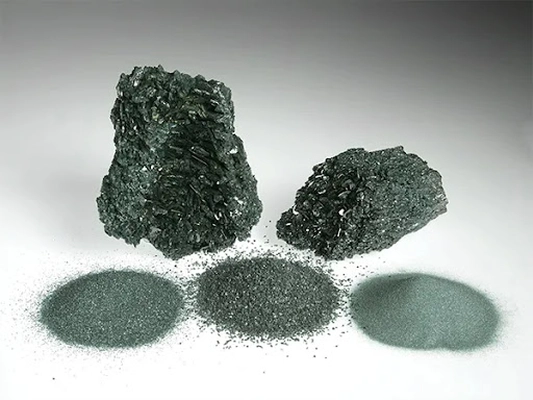
Silicon carbide is one of the hardest industrial abrasives, with a Mohs hardness of around 9.2–9.5. This makes it highly effective for cutting, grinding, and processing very hard materials such as ceramics, carbide, and stone.
Steel shot, with a hardness of approximately 6–7, offers good wear resistance but cannot match silicon carbide in high-hardness applications.
Density and Impact Performance
Steel shot has a significantly higher density (~7.8 g/cm³), which results in stronger impact force during blasting or peening. This makes it highly effective for removing heavy rust, mill scale, and contaminants from metal surfaces.
In contrast, silicon carbide has a lower density (~3.2 g/cm³), producing less impact but offering sharper cutting action. It is better suited for precision surface treatment where excessive impact is not desired.
Toughness and Durability
Steel shot is highly tough and resistant to breakage, allowing it to be reused multiple times in blasting systems. This makes it cost-effective for large-scale industrial operations.
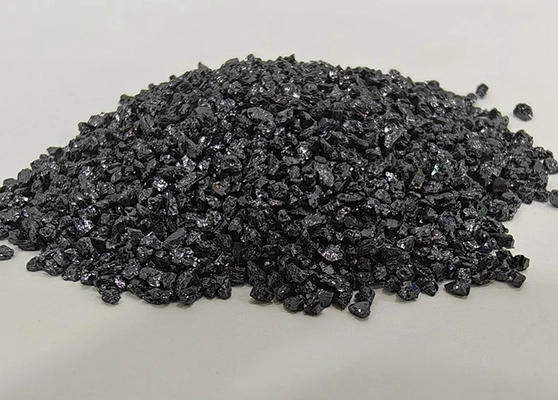
Silicon carbide is more brittle and tends to fracture under repeated impact. However, this fracture creates new sharp edges, maintaining its cutting efficiency.
Chemical Stability
Silicon carbide is chemically stable, resistant to corrosion, and capable of withstanding high temperatures. It is suitable for demanding environments such as semiconductor processing and high-temperature applications.
Steel shot, being iron-based, is more prone to oxidation and corrosion, especially in humid or aggressive environments, and may require anti-rust treatment.
Application Comparison
Silicon Carbide Applications
- Precision grinding and polishing
- Ceramics and glass processing
- Stone engraving and cutting
- Semiconductor wafer processing
- High-temperature furnace materials
Steel Shot Applications
- Metal surface cleaning and rust removal
- Shot blasting and shot peening
- Surface strengthening of gears and springs
- Foundry cleaning and sand removal
Performance in Blasting Applications
Silicon carbide is ideal for aggressive cleaning and fast material removal, especially on hard surfaces. It creates a rougher profile, which improves coating adhesion.
Steel shot is better for controlled cleaning and surface strengthening. It produces a smoother and more uniform finish and is commonly used in shot peening processes.
Cost vs Efficiency
Steel shot is more economical over time due to its high reusability. Silicon carbide, although consumed faster, offers higher efficiency and shorter processing time.
- Choose silicon carbide for speed, hardness, and precision
- Choose steel shot for durability and long-term cost efficiency
How to Choose Between Silicon Carbide and Steel Shot
- High hardness materials: silicon carbide
- Heavy rust removal: steel shot or silicon carbide (depending on speed vs cost)
- Surface strengthening: steel shot
- Precision finishing: silicon carbide
Explore our silicon carbide grit for blasting and precision applications.
FAQs
Which is harder, silicon carbide or steel shot?
Silicon carbide is significantly harder than steel shot and is better for cutting hard materials.
Which abrasive has stronger impact?
Steel shot has stronger impact due to its higher density.
Can steel shot be reused?
Yes, steel shot can be reused many times in blasting systems.
Which is better for precision work?
Silicon carbide is better for precision applications due to its sharp cutting edges.