Black silicon carbide is widely used in abrasive blasting, grinding wheels, refractory formulations, and metallurgical processes. Its sharp edges, high hardness, and cost efficiency make it one of the most versatile industrial abrasives. This guide explains how black SiC is produced, how grit sizes are classified, and what buyers should consider when selecting a supplier for consistent quality.
Introduction
Black silicon carbide (SiC) has been a foundational material in industrial grinding and cutting for decades. Its combination of hardness, thermal stability, and sharp angular grains allows it to perform well in a wide range of abrasive processes. Whether shaping metals, refining surfaces, or blending refractory mixtures, manufacturers rely on stable, predictable SiC grit to achieve consistent results.
Because black SiC is used across such diverse applications, the expectations placed on suppliers are high. Buyers look for reliable particle size control, clean screening, uniform crystal properties, and traceable quality records. This article outlines how black SiC abrasive is made, how grit sizes differ, and what technical specifications are most important when evaluating a long-term supplier.
1. What Is Black Silicon Carbide?
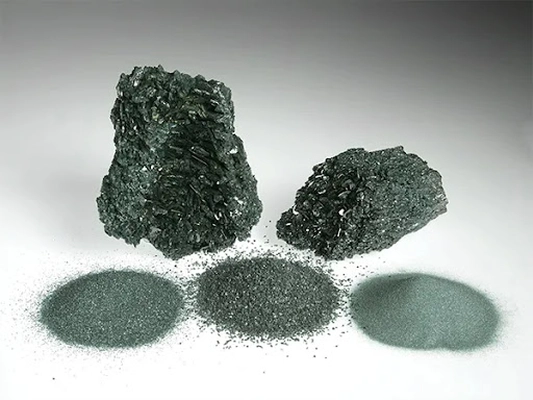
Black silicon carbide is produced in an electric resistance furnace using silica sand and petroleum coke. The resulting crystal exhibits high hardness (around Mohs 9.2), strong cutting ability, and good thermal stability. Compared with its green counterpart, black SiC is slightly tougher and more cost-effective, which is why it is widely used for general abrasive applications.
The final performance depends heavily on crystal structure, crushing method, and screening accuracy. A supplier’s control over these factors determines how consistently the abrasive performs from batch to batch.
2. Understanding Black SiC Grit Sizes
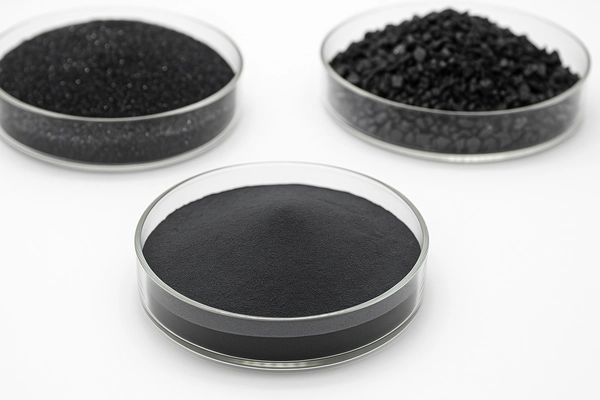
Black silicon carbide grit is classified according to FEPA (F-series), ANSI, or JIS standards. Each grit size reflects the particle’s average dimensions and allowable distribution range.
- F12–F60: commonly used in grinding wheels and heavy cutting operations
- F80–F180: suitable for surface conditioning and medium-level shaping
- F220–F500: used in fine grinding and multi-step finishing
- Refractory sizes (0–1 mm, 1–3 mm, 3–5 mm): used in kiln furniture, castables, and bricks
For buyers requiring finer powders, green or black micro powders (F400–F1200) may be more suitable. See: SiC micro powder guide.
3. Common Industrial Applications
The combination of hardness, thermal conductivity, and sharp fractured grains makes black SiC a versatile abrasive. It is widely used in:
- Bonded abrasives: grinding wheels, cutting discs, honing tools
- Coated abrasives: sanding paper, belts, and flap wheels
- Blasting media: rapid material removal and surface texturing
- Refractories: castables, kiln furniture, high-temperature components
- Metallurgy: deoxidizing and carbon-boosting additives
4. Key Specifications to Review
Before purchasing black SiC abrasive, manufacturers typically evaluate:
- SiC content: commonly 97%–99%
- Bulk density: influences grinding and blending behavior
- Magnetic content: especially important for high-purity processes
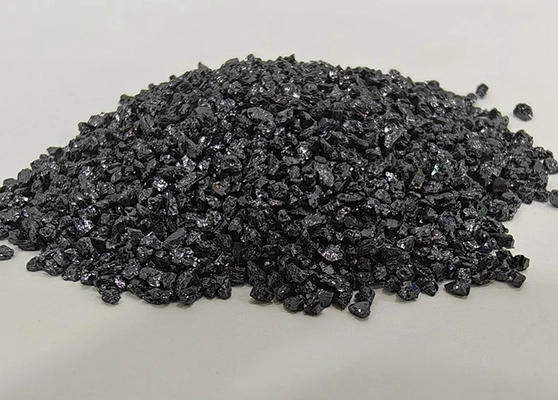
- Particle shape and toughness: affects cutting behavior
- Oversized particle limits: critical to avoid scratches
5. Quality Control and Testing Practices
Reliable suppliers use laser particle size analyzers, magnetic separators, sieving tests, and chemical composition checks to maintain consistency. Each batch should offer traceability, documented PSD curves, and impurity data.
CanAbrasive provides COA documentation for every shipment and can arrange third-party inspections when required.
6. Packaging and Global Shipping
Black SiC grit is typically packed in 25 kg bags or 1-ton jumbo bags. Packaging options include paper bags, woven bags with liners, or moisture-resistant materials depending on customer needs. All products can be palletized for containerized shipping.
CanAbrasive exports SiC abrasives worldwide on FOB, CFR, or CIF terms.
7. Why Many Manufacturers Choose CanAbrasive
CanAbrasive supplies black silicon carbide grit with stable grading, clean screening, and competitive pricing. We support abrasive manufacturers, refractory plants, and metalworking operations with:
- Wide range of grit sizes from F12 to fine powders
- Consistent batch-to-batch quality
- COA, MSDS, and optional SGS inspection
- Flexible packaging and global shipping options
- Additional abrasive materials such as BFA, WFA, and SiC micro powders
8. FAQ
Q1: What applications are best suited for black silicon carbide grit?
It is widely used in grinding wheels, blasting media, refractory materials, and general abrasive processes.
Q2: How does black SiC differ from green SiC?
Black SiC is slightly tougher and more economical, while green SiC offers higher purity and sharper cutting for precision applications.
Q3: What information is needed for a quotation?
Specify grit size, target application, required purity level, quantity, and destination port.
Q4: Can black SiC be customized for specific processes?
Yes. Suppliers can adjust screening curves, remove magnetic impurities, or tailor packaging based on your process.
Q5: What is the MOQ?
Trial orders generally start at 1 ton, while container loads offer the best logistics cost.
9. Request a Technical Recommendation
If you need support selecting the right black SiC abrasive for your application, our technical team can help evaluate specifications and recommend suitable grit sizes.
WhatsApp: +86-17803859504
Website: https://canabrasive.com