Fine silicon carbide powder is widely used in precision lapping, polishing, advanced ceramics, and high-performance composite manufacturing. Grades in the F400–F1200 range are valued for their controlled particle size and sharp cutting behavior. CanAbrasive provides stable-quality micro powders with full inspection reports and global shipping support.
Introduction
In many precision manufacturing environments, the finishing stage determines whether a product meets its target performance. Materials such as mechanical seals, ceramic components, optical elements, and hardened alloys all rely on finely graded abrasives to achieve smoothness, planarity, and defect-free surfaces. Among those abrasives, silicon carbide micro powder has become one of the most dependable options.
Its popularity comes from the balance of hardness, brittleness, and predictable particle shape. When processed into finer grades—especially within the F400–F1200 range—its cutting behavior becomes ideal for controlled material removal. Because of this, choosing a supplier that understands consistent grading and strict quality control has a direct impact on production outcomes.
This article outlines the characteristics of fine SiC powders, compares black and green grades, and highlights the technical considerations buyers should evaluate before sourcing materials. For readers exploring other abrasive options, internal references to coarser silicon carbide grains, brown fused alumina, and white fused alumina are also included.
1. What Defines a Quality Silicon Carbide Powder?
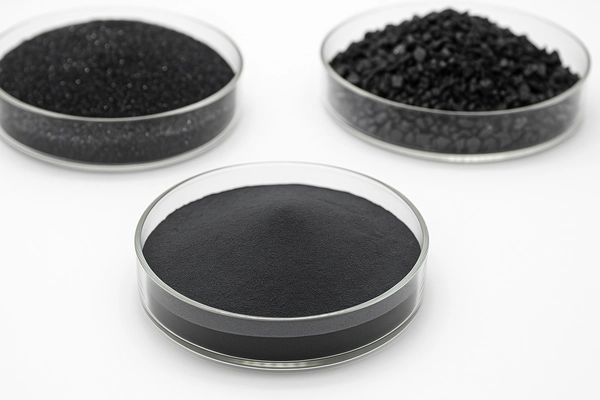
Silicon carbide powder is produced by milling and classifying SiC crystals into fine particle distributions. The quality of these powders is largely determined by:
- Particle size distribution: narrow and predictable for stable polishing results
- Particle shape: sharp and angular, enabling efficient cutting
- Purity: controlled levels of carbon, iron, and other trace components
- Surface condition: clean, low agglomeration, and free from processing residues
In technical applications, even slight variations in PSD or impurity levels can lead to inconsistent finishes or surface defects. This is why professional buyers look closely at how suppliers monitor and document quality.
2. The Role of F400–F1200 in Precision Finishing
Grades in the F400–F1200 range represent the transition from fine to ultra-fine abrasives. They are commonly used in multi-step finishing sequences where each stage prepares the surface for the next level of refinement.
- F400–F600: suitable for intermediate lapping work
- F800–F1000: used for semi-final polishing steps
- F1200: preferred where smooth, low-defect surfaces are essential
These grades allow manufacturers to balance cutting efficiency with surface quality—achieving precise Ra values without excessive processing time.
3. Choosing Between Black and Green Micro Powder
Silicon carbide micro powder is available in two primary variants. Each offers different advantages depending on the material being processed and the desired finish.
Black Silicon Carbide
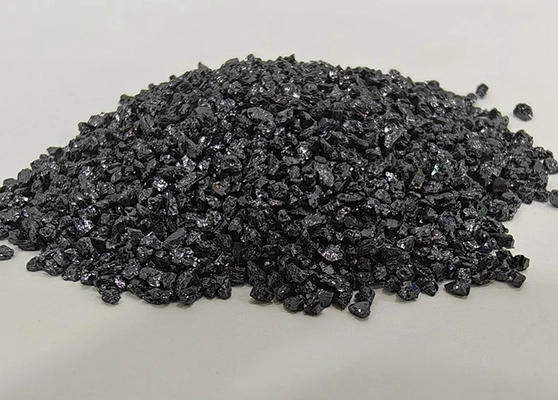
Black SiC is slightly tougher and typically more economical. It is often selected for general lapping, mold and die finishing, or applications where a highly aggressive cut is required.
Green Silicon Carbide
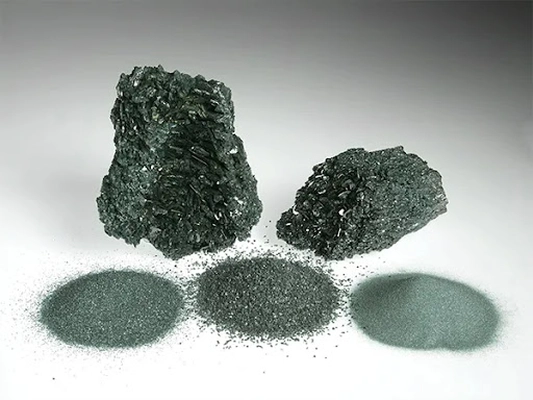
Green SiC offers higher purity and a more brittle crystal structure, producing sharper cutting edges. It is well-suited for final polishing of ceramics, glass, and other hard materials where a clean, bright finish is important.
Choosing the Right Type
Many manufacturers use a combination of both—black SiC for the early stages, then green SiC for the final finishing steps where surface quality matters most.
4. Where These Fine Powders Are Used
F400–F1200 silicon carbide powders are commonly used in:
- Flat lapping and precision surface correction
- Polishing of ceramic parts, mechanical seals, and tungsten carbide components
- Pre-polishing of optical glass and advanced substrates
- Fine finishing of metal and alloy components
- Reinforcement materials in composites and coatings
For processes involving earlier roughing stages, coarser grains listed on our silicon carbide supplier page may be more appropriate.
5. Key Specifications to Review Before Purchasing
When evaluating technical data sheets, the following points are worth close attention:
- D50 and full PSD curve: ensures consistency between batches
- Oversized particle limits: critical for preventing scratches
- Chemical composition: especially Fe₂O₃ and free carbon
- Flow characteristics: affects slurry stability during polishing
- Moisture and storage conditions: impacts usability over time
6. Quality Control Practices
Reliable suppliers monitor their powders using laser particle size analyzers, chemical composition tests, and visual inspections. Consistency is particularly important in the F800–F1200 range, where minor deviations can affect both surface finish and processing efficiency.
CanAbrasive provides COA documentation with each batch and can arrange third-party inspections if required.
7. Packaging, Handling, and Logistics
Silicon carbide micro powders are typically supplied in:
- 25 kg paper or woven bags with inner liners
- 1-ton jumbo bags for bulk usage
- Custom labeling and palletizing upon request
For best performance, powders should be stored in a dry, ventilated environment and kept sealed to avoid moisture absorption.
8. Why Many Manufacturers Choose CanAbrasive
CanAbrasive supports both high-volume manufacturers and specialized precision workshops with stable, consistent SiC micro powders. Our strengths include:
9. FAQ
Q1: What are the typical applications of F400–F1200 micro powder?
They are commonly used for precision lapping, polishing of ceramics and metals, optical pre-polishing, and fine finishing work.
Q2: Should I choose black or green powder?
Black is preferred for earlier stages or when higher toughness is needed, while green is typically chosen for final finishing due to its higher purity and sharper cutting behavior.
Q3: What information is useful when requesting a quotation?
Desired grade (e.g., F800, F1200), preferred color (black or green), application details, consumption volume, and destination port.
Q4: Do fine powders come with COA?
Yes. CanAbrasive provides full COA and can arrange SGS testing when needed.
Q5: What is the recommended minimum order quantity?
Trial orders often begin at 1 ton, while the most economical freight rates are obtained with full-container shipments.
10. Request Technical Consultation
If you are evaluating fine silicon carbide powders for your production line or comparing specifications across different suppliers, our technical team can help you identify the most suitable grade for your process.
WhatsApp: +86-17803859504
Website: https://canabrasive.com