Silicon carbide (SiC) prices per ton vary widely depending on grade, purity, grit size, and end use. In global trade, common commercial prices typically range from a few hundred to several thousand USD per metric ton:
- Metallurgical SiC (around 88–90%): usually at the lower end of the price spectrum.
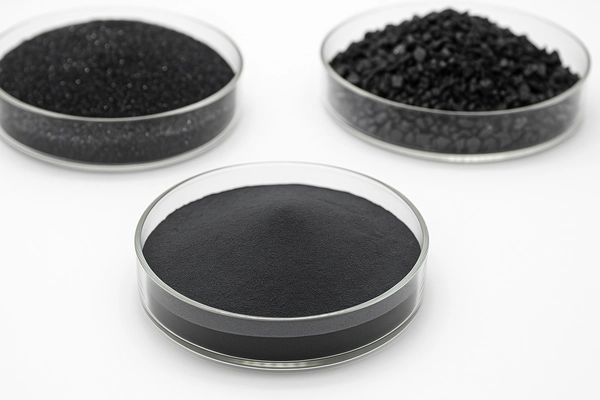
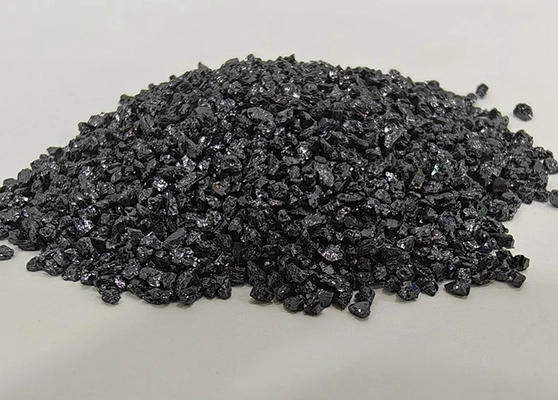
- Black SiC abrasives (grits and powders): mid-range prices, increasing with finer grit sizes.
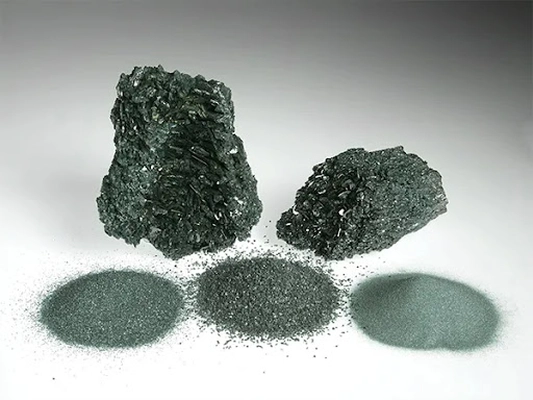
- Green SiC abrasives and micro powders: higher prices, especially for very fine polishing grades.
As a broad reference, typical FOB China price ranges (USD per ton) are:
- Metallurgical-grade SiC 88–90%: about USD 450–750 / ton.
- Black silicon carbide abrasives (approx. F12–F400): roughly USD 750–1,250 / ton, with finer grits at the higher end.
- Green silicon carbide abrasives (approx. F12–F400): roughly USD 1,200–1,900 / ton, depending on purity and grit size.
- Green SiC micro powders (approx. F500–F1200+): roughly USD 1,900–2,800+ / ton, especially for very fine polishing grades.
In most global markets, silicon carbide prices therefore typically fall between about USD 450 and USD 2,800 per ton, depending on grade, grit size, and purity.
Final cost per ton also depends on shipment terms (FOB, CIF), logistics, packaging, and order quantity. The goal of this article is not to fix a single “correct” price, but to explain what drives SiC pricing and how buyers can evaluate quotations realistically.
Introduction
Silicon carbide is used in many industries: grinding wheels, coated abrasives, blasting media, refractories, foundry deoxidizers, kiln furniture, and more. As a result, there is no single market price. A buyer asking “How much does silicon carbide cost per ton?” really needs to consider which grade, which particle size, and which delivery terms are being discussed.
For example, a metallurgical-grade SiC 90% used for deoxidation in steelmaking will have a different price level from a high-purity green SiC micro powder used in precision polishing. Even within abrasive grades, coarse F24 grain can be priced very differently from F800 or F1200 micro powders.
This article provides an overview of the factors that influence SiC pricing per ton, typical price relationships between different grades, and practical tips for requesting and comparing quotations from suppliers.
1. What Drives Silicon Carbide Price per Ton?
Several main elements influence how much silicon carbide costs per ton in international trade:
- Grade and purity: metallurgical, refractory, black abrasive, green abrasive, micro powder.
- Particle size: coarse lumps and grains are generally cheaper than very fine micro powders.
- Production process and energy cost: SiC is produced in electric resistance furnaces, so electricity and raw materials directly affect price.
- Quality control and documentation: tighter tolerances and more detailed testing usually increase cost.
- Packaging and logistics: jumbo bags vs. small bags, domestic vs. export packaging, and destination freight.
- Order quantity and contract terms: full-container loads and long-term contracts often enjoy better pricing than small spot orders.
When a buyer understands these levers, they can better interpret why different suppliers present different prices for apparently similar products.
2. Typical Price Segments by Grade
Rather than quoting exact numbers that change over time and between regions, it is more useful to think in terms of relative price levels for each category of silicon carbide.
| Segment | Typical Products | Relative Price Level | Notes |
|---|---|---|---|
| Metallurgical-grade SiC (around 88–90%) | Lumps, 0–10 mm, 10–50 mm | Low to lower-middle | Used as deoxidizer and alloying material in steel and foundry applications. |
| Refractory-grade SiC | Grains and powders for castables, bricks | Low-middle to middle | Price depends on purity and size distribution; higher-purity and tighter specs cost more. |
| Black silicon carbide abrasives | F12–F220 grains, F230–F400 powders | Middle | Common in grinding wheels, coated abrasives, and blasting; finer grits are more expensive. |
| Green silicon carbide abrasives | F12–F400 grains and powders | Upper middle | Typically more expensive than black SiC due to higher purity and sharper microstructure. |
| Green SiC micro powders | F500–F1200 and finer | High | Used in precision polishing; strict control of oversized particles raises cost. |
Within each segment, actual USD/ton prices can vary depending on market conditions, seller location, and negotiated terms, but the relative positions remain broadly similar over time.
3. Black Silicon Carbide Abrasives: Price Factors
Black silicon carbide is widely used in grinding wheels, cutting discs, blasting media, and general abrasives. Its price per ton is influenced by:
- Grit size: coarse F12–F60 is generally cheaper per ton than finer F220–F400 or powders.
- Chemical purity and magnetic content: stricter limits add to production cost.
- Shape and grading: tighter particle size distribution and quality control require more careful processing.
- End use: abrasives for demanding applications (e.g., high-speed wheels) may require higher-spec material, reflected in the price.
When comparing prices for black SiC per ton, buyers should ensure that grit size and specification are truly comparable. A cheaper price may indicate broader tolerances or lower purity rather than a better deal.
4. Green SiC and Micro Powder Pricing
Green silicon carbide is typically produced from higher-purity raw materials and is favored in applications such as precision grinding, lapping, and polishing of ceramics, glass, and hard alloys. Prices per ton are usually higher than for black SiC for several reasons:
- Higher purity feedstock: cleaner raw materials and additional refining steps increase cost.
- More demanding applications: surface finish requirements often drive tighter specifications.
- Micro powder processing: very fine particle sizes demand extra classification and quality control.
- Specialized testing: control of oversized particles and cleanliness adds to the overall cost.
As grit size increases (e.g., from F400 to F800, F1000, F1200 and beyond), the price per ton generally rises, reflecting the additional processing needed to obtain consistent micro powders at that scale.
5. Metallurgical Silicon Carbide and Deoxidizer Grades
Metallurgical-grade SiC, typically around 88–90% SiC, is widely used as a deoxidizer and alloying material in steelmaking and foundry processes. Its price per ton is usually lower than abrasive-grade black and green SiC, for several reasons:
- The focus is on chemical performance in the melt, not on precise grit size or surface condition.
- Allowed impurity levels are typically higher than in high-purity abrasive or refractory grades.
- Particle size distributions such as 0–10 mm are less demanding to produce than narrow FEPA grit bands.
However, even within metallurgical SiC, price differences exist between different size ranges, packing options, and more stringent chemical specifications. Long-term contracts and larger tonnages often lead to more favorable USD/ton pricing.
6. FOB, CIF, and Other Trade Terms: Why the Same Product Has Different Prices
When buyers ask “How much does silicon carbide cost per ton?”, they often receive answers that use different trade terms. The most common are:
- EXW (Ex Works): price at the factory gate, excluding inland transport, export customs, and sea freight.
- FOB (Free On Board): includes local transport to port, export formalities, and loading on the vessel.
- CFR/CIF: includes sea freight (and insurance for CIF) to the destination port.
A CIF price per ton will always be higher than an FOB price for the same material, because it includes ocean freight and sometimes insurance. To compare quotations fairly, it is important to:
- Confirm which Incoterms are being used.
- Convert all prices to the same basis (for example, all FOB or all CIF) before making a decision.
- Consider local port charges and onward inland transport at the destination.
7. Basic Cost Structure Behind SiC Pricing
While every producer has its own cost model, a simplified view of the SiC cost structure looks like this:
- Raw materials: silica sand or quartz, carbon sources, and additives.
- Electric furnace operation: substantial electricity consumption and furnace maintenance.
- Crushing and sizing: multiple steps to achieve desired grains or powders.
- Classification and quality control: especially important for abrasive and micro powder grades.
- Packaging and logistics: bags, pallets, loading, inland transport, and export or domestic freight.
- Overheads and compliance: environmental controls, labor, and quality management systems.
Changes in energy costs, raw material availability, and freight rates all feed into the final USD/ton price that a buyer sees in a quotation.
8. How to Compare Quotations Fairly
In practice, different suppliers may quote very different prices for what appears to be “the same” silicon carbide. To compare fairly:
- Ensure grade and specification are equivalent (SiC %, impurity limits, magnetic content).
- Verify that grit size or particle size is truly the same, not just similar.
- Normalize Incoterms and check whether prices include freight to your port.
- Consider packaging type and minimum order quantity.
- Evaluate documentation and quality control offered with the shipment.
A slightly higher price per ton may be justified if it comes with better consistency, lower risk, and stronger technical support.
9. Information to Provide When Asking for a Price per Ton
Buyers can receive faster and clearer quotations if they provide detailed requirements to the supplier. Useful information includes:
- Intended application (abrasive, refractory, metallurgical, blasting, polishing, etc.).
- Desired grade (black, green, metallurgical) and approximate purity if known.
- Grit size or particle size range required.
- Expected annual volume and typical order size per shipment.
- Preferred Incoterms (FOB, CIF) and destination port.
- Any special requirements for packaging, documentation, or testing.
With this information, suppliers can provide realistic USD/ton prices and suggest alternatives when appropriate.
10. FAQ
Q1: Why do silicon carbide prices per ton vary so much?
Prices differ because of grade, purity, particle size, production route, and trade terms. A metallurgical SiC 90% lump used for deoxidation will naturally have a different price level than a high-purity green SiC micro powder used for precision polishing.
Q2: Is green silicon carbide always more expensive than black?
In most cases, yes. Green SiC usually has higher purity and is used in more demanding applications, so its production and quality control costs per ton are higher than for black SiC.
Q3: How do I know if a quoted price per ton is reasonable?
Check that the specification, grit size, and Incoterms are clearly defined, then compare with quotations from other qualified suppliers. Large deviations may suggest differences in quality, hidden costs, or incomplete information.
Q4: Why is the CIF price higher than the FOB price for the same material?
CIF includes ocean freight (and insurance, when agreed) to your destination port, while FOB covers only costs up to loading the vessel in the exporting country. The difference is mainly the freight and related charges.
Q5: Can I reduce the price per ton by ordering larger quantities?
Often yes. Larger, regular orders allow suppliers to optimize production and logistics, which can result in more favorable USD/ton pricing, especially when combined with long-term contracts.
11. Request a Silicon Carbide Price Consultation
If you are evaluating silicon carbide for abrasives, refractories, or metallurgical applications and need guidance on realistic price levels per ton, our team can review your specifications and propose suitable grades and supply options.
WhatsApp: +86-17803859504
Website: https://canabrasive.com