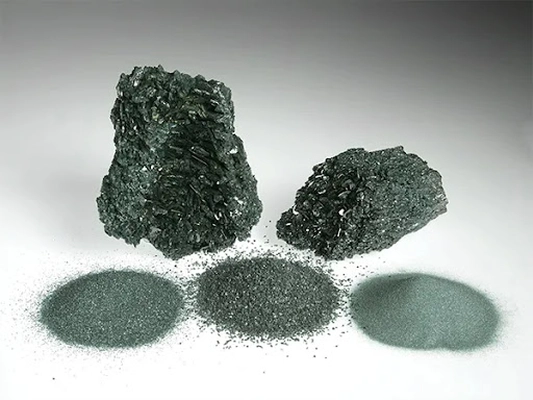
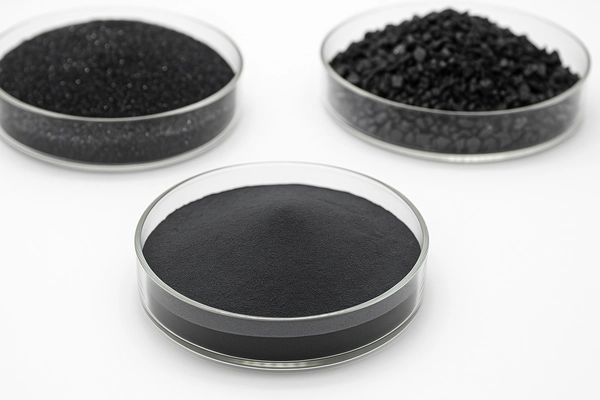
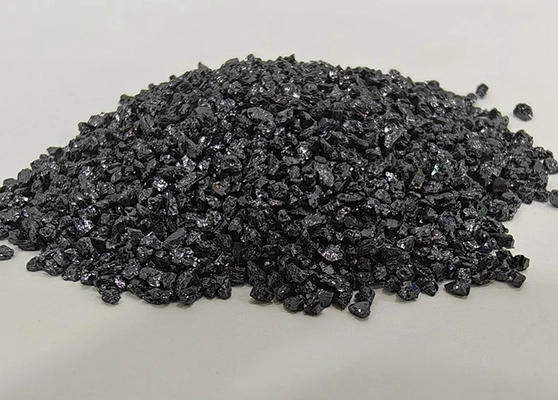
Metallurgical-grade silicon carbide (commonly around 90% SiC) is widely used in steelmaking as a deoxidizer, carbon additive, and cost-efficient alloying material. Its stable reactivity and combination of silicon and carbon make it an effective substitute for traditional deoxidizers such as ferrosilicon and recarburizers.
Introduction
Modern steelmaking relies heavily on materials that can remove oxygen efficiently while improving the final chemical composition of the melt. Silicon carbide has emerged as one of the most practical solutions for this purpose. The metallurgical grade—typically around 88%–92% SiC—offers a unique balance of silicon and carbon, allowing steel plants to reduce the number of separate additives required during refining.
Its role extends beyond oxygen removal. SiC can help stabilize carbon content, reduce slag volume, improve energy efficiency, and enhance the overall metallic yield. This article provides a technical overview of how SiC works inside the furnace, key properties to evaluate, and why many steelmakers have gradually shifted from traditional deoxidants to this multifunctional material.
1. What Is Metallurgical Silicon Carbide?
Metallurgical silicon carbide is a furnace-produced material containing silicon and carbon in a stable crystalline structure. Unlike higher-purity abrasive grades, metallurgical SiC focuses on chemical performance rather than surface shape or particle uniformity. It is primarily used in:
- Deoxidation during steelmaking
- Carbon and silicon adjustment in furnace charges
- Reducing slag viscosity and improving metal recovery
By supplying both silicon and carbon simultaneously, metallurgical SiC simplifies furnace chemistry and can help reduce the overall cost of alloy additions.
2. Why SiC Performs Well as a Deoxidizer
The effectiveness of SiC in deoxidation comes from two reactions:
- Silicon reacts with oxygen to form stable SiO₂
- Carbon supports the reduction of oxides and contributes to CO generation
In high-temperature environments, these reactions occur quickly, reducing oxygen levels and forming cleaner slag layers. Compared with single-element deoxidizers, SiC often creates less slag volume and improves tapping results.
3. Typical Chemical Composition (SiC 90%)
The most commonly used grade contains around 90% silicon carbide. A typical range looks like:
| Component | Typical Value |
|---|---|
| SiC | 88% – 92% |
| Si | ≥ 45% (combined silicon contribution) |
| C | ≥ 25% |
| Fe₂O₃ | ≤ 2% |
| Moisture | Low, controlled |
Custom compositions—such as higher carbon or lower impurity versions—can be produced depending on furnace requirements.
4. Main Applications in Steelmaking
Metallurgical SiC is used across multiple steelmaking and foundry processes:
- Electric arc furnaces (EAF): deoxidizing & carbon adjustment
- Induction furnaces: improving deoxidation efficiency and reducing slag
- Converter steelmaking: adjusting silicon before tapping
- Foundries: supporting melt purification and improving flow
Its multi-functionality often replaces or reduces the dosage of FeSi, recarburizers, and coke.
5. Advantages Compared With Traditional Materials
- Dual-function material – provides both silicon and carbon
- Lower slag generation – cleaner tapping and better metal recovery
- Cost efficiency – reduces FeSi and carburizer usage
- Stable deoxidation behavior – predictable reaction inside the furnace
- Energy savings – promotes smooth melting reactions
Many steel plants adopt SiC 90% after cost-performance analysis shows consistent improvements in furnace economics.
6. Key Specifications to Review
- SiC content: main performance indicator
- Particle size: typically 0–10 mm, 1–5 mm, or custom ranges
- Free carbon level: contributes to carburization
- Impurities (Fe₂O₃, Al₂O₃): lower levels improve steel cleanliness
- Reactivity: influences melting and reduction behavior
7. Packaging & Handling
Metallurgical SiC is typically supplied in:
- 25 kg woven bags
- 1-ton jumbo bags
- Moisture-resistant packaging (optional)
It should be stored in a dry environment and used on a first-in, first-out basis.
8. Why CanAbrasive Supplies High-Performance SiC
CanAbrasive produces and supplies metallurgical-grade silicon carbide with stable chemistry and consistent sizing. Our advantages include:
- Controlled SiC 88%–92% grades
- Reliable carbon and silicon contribution
- COA included with each shipment
- Global shipping and export documentation
- Related products: SiC abrasive grains, brown fused alumina
9. FAQ
Q1: What is the main purpose of metallurgical silicon carbide?
It acts as a deoxidizer, carbon additive, and silicon source in steelmaking and foundry operations.
Q2: What does “SiC 90%” mean?
It refers to a metallurgical-grade material containing roughly 90% silicon carbide, commonly used for EAF and IF steelmaking.
Q3: Can SiC replace ferrosilicon?
In many applications, yes. SiC provides silicon and carbon together, often reducing the required dosage of FeSi.
Q4: What particle size should I choose?
Common sizes include 0–10 mm and 1–5 mm. The choice depends on furnace type and desired dissolution speed.
Q5: Do you provide COA?
Yes, every shipment includes a Certificate of Analysis with chemical and physical properties.
10. Request a Technical Recommendation
If you need support selecting the right metallurgical SiC grade for your furnace or evaluating cost-performance improvements, our team can provide detailed recommendations.
WhatsApp: +86-17803859504
Website: https://canabrasive.com