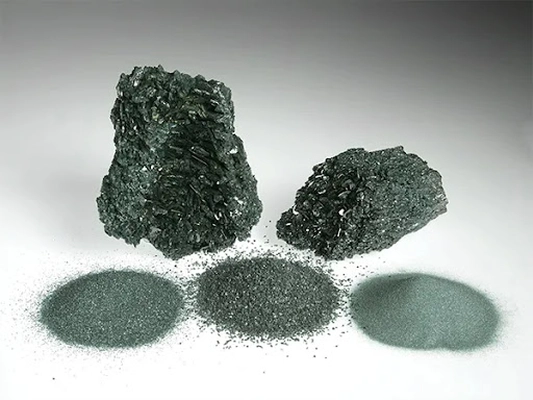
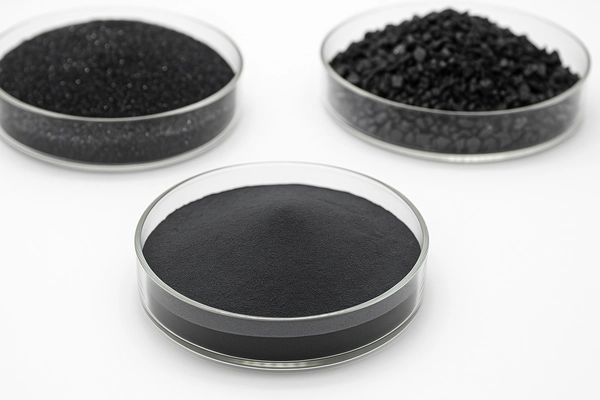
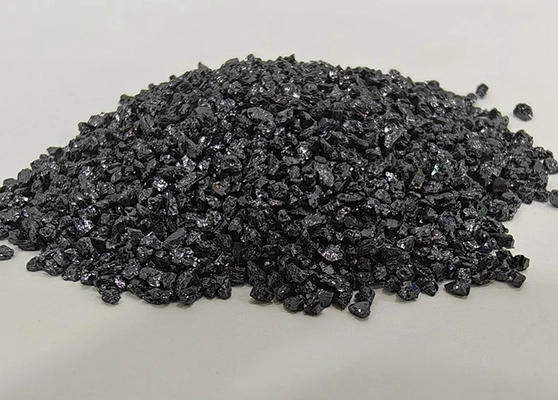
Black silicon carbide is one of the workhorse materials in the abrasives industry. Its high hardness, sharp fractured edges, and good thermal resistance make it suitable for grinding wheels, cutting discs, coated abrasives, and demanding blasting operations. The way it performs in practice, however, is strongly influenced by grit size.
From coarse F12–F36 grains in cutting wheels to finer F220–F400 in precision blasting and finishing, each size range is associated with a specific balance of material removal rate and surface profile. This guide looks at how different black SiC grits are used in industrial abrasives and surface preparation.
Introduction
Black silicon carbide has been used for decades in metalworking, foundries, and fabrication shops. Compared with many other abrasive materials, it offers a combination of sharpness and toughness that suits heavy grinding as well as more controlled finishing work. This versatility explains why it appears in products as varied as cutting discs, grinding wheels, sanding belts, and blasting media.
In day-to-day production, operators often speak in terms of “coarse” or “fine” grit, but the differences between F16, F60, F120, and F320 can be significant in terms of cut rate, wheel life, and surface profile. Choosing the right size range for black SiC is therefore an important part of abrasive and process design.
The following sections group black silicon carbide into practical grit bands and describe where each is commonly used in bonded abrasives, coated abrasives, and blasting operations.
1. Black Silicon Carbide in Industrial Abrasives
Black silicon carbide is produced in an electric resistance furnace from silica sand and a carbon source. It combines:
- High hardness (around Mohs 9.2)
- Angular, sharp fractured grains
- Reasonable toughness for repeated impact in grinding and blasting
- Good thermal conductivity and temperature resistance
These characteristics make black SiC a practical choice for:
- Bonded abrasives such as grinding wheels and cut-off wheels
- Coated abrasives such as belts, paper, and fiber discs
- Loose abrasives for pressure blasting and wheel blasting
2. How Grit Size Influences Performance
Grit size is one of the primary levers for tuning abrasive behavior. In simple terms:
- Coarser grits remove material quickly, leave deeper scratch patterns, and are used earlier in the process.
- Finer grits remove less material per pass, reduce surface roughness, and are used for finishing or preparation before coating.
For black silicon carbide, the same overall material can therefore be present in a cut-off wheel for heavy-duty work or in a blasting setup where the goal is a specific surface profile before painting, plating, or thermal spray coating.
3. Coarse Grits (Approx. F12–F60): Heavy Grinding & Cutting
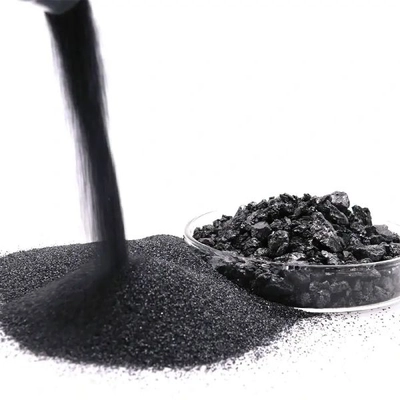
Coarse black SiC grits are typically used where high removal rates and robust cutting behavior are required. Typical examples include:
- Cutting wheels and rough grinding wheels for castings, forgings, and hard alloys
- Rough grinding of stone, ceramics, and wear-resistant components
- Heavy blasting where a strong, aggressive profile is desired
At these sizes, the priority is normally efficiency rather than surface finish. Equipment design, coolant supply, and wheel structure play major roles in managing heat and wear when using coarse grits.
4. Medium Grits (Approx. F80–F220): General Grinding & Deburring
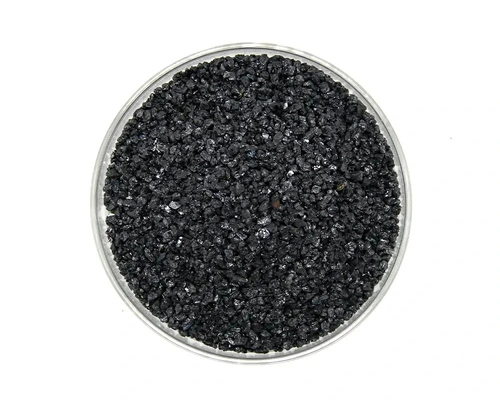
Medium-size black silicon carbide grits form the backbone of many everyday abrasive products. They are often found in:
- General-purpose grinding wheels for steel and non-ferrous metals
- Sanding belts and discs used for deburring and dimensioning
- Blasting media where a controlled, but still relatively pronounced, surface texture is needed
In this range, manufacturers usually look for a balanced performance: enough cutting power to maintain productivity, while producing a surface that can either be used as-is or refined by one or two additional steps.
5. Fine Grits (Approx. F230–F400): Surface Preparation & Finishing
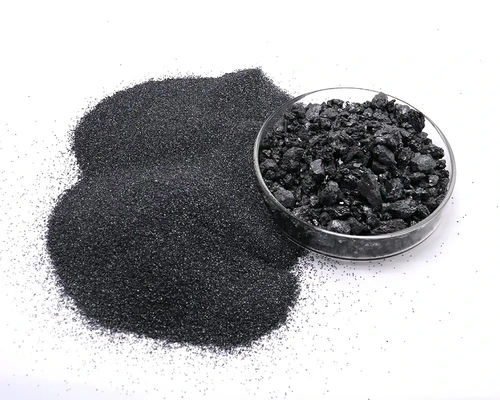
Fine black SiC grits are commonly used when surface quality and profile control matter more than removal rate. Examples include:
- Precision blasting before painting, powder coating, or thermal spray
- Finishing passes on hardened components where a smoother profile is required
- Fine sanding and lapping operations where controlled roughness is important
These grits help remove shallow defects and blending marks from previous stages, preparing the surface for its final function—whether that is as a mating surface, a coated surface, or a visible exterior.
6. Powders and Micro Grits (F500+): Compounds and Special Uses
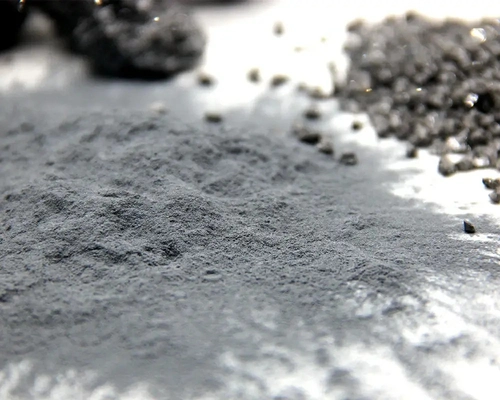
While green silicon carbide is more common in very fine polishing, black SiC powders also play a role in some applications, for example:
- Abrasive compounds and pastes for maintenance work
- Certain lapping processes where high cutting ability is needed
- Additives in wear-resistant coatings and composite materials
In these cases, the emphasis is on combining the sharpness of SiC with suitable binders, carriers, or matrix materials rather than using the grains in free blasting or bonded form only.
7. Application Matrix by Grit Size and Process Type
The following table provides a concise overview of how black silicon carbide grits are typically aligned with different processes. It is intended as a starting point for discussions rather than a rigid rule.
| Approximate Grit Range | Process Type | Typical Usage |
|---|---|---|
| F12–F36 (coarse) | Cutting & heavy grinding | Cut-off wheels, snagging wheels, rough grinding of castings |
| F40–F60 (coarse/medium) | General grinding | Bench grinding, rough deburring, high-energy blasting |
| F80–F150 (medium) | General-purpose grinding & sanding | Grinding wheels, belts, discs for metals and stone |
| F180–F220 (medium/fine) | Light grinding & controlled blasting | Surface conditioning, moderate Ra targets before coating |
| F230–F320 (fine) | Surface preparation | Precision blasting, pre-coating profiles, fine deburring |
| F360–F400 (fine) | Finishing & light lapping | Fine surface blending, preparation for polishing |
8. Practical Guidelines for Selecting Black SiC Grits
When designing a grinding or blasting process with black silicon carbide, consider the following points:
- Define the target surface condition – required roughness, profile, or visual appearance.
- Match grit size to the heaviest necessary correction – use coarser grits only where justified.
- Use intermediate grits to remove deep scratches and reduce the number of finishing steps.
- Test small increments when moving to finer grits, especially for coated and bonded abrasives.
- Monitor tool life and process stability – a slightly finer grit may improve consistency even if removal rate decreases.
9. Information to Share with Your Abrasives Supplier
To receive meaningful support from a black SiC supplier, it helps to provide more than just the grit number. Useful information includes:
- Type of abrasive product (wheel, disc, belt, blasting media, paste)
- Workpiece material (steel, stainless steel, cast iron, stone, others)
- Process parameters (speed, pressure, dry or wet operation)
- Target surface profile or roughness range
- Any constraints related to dust, contamination, or cleanliness
With these details, suppliers can propose suitable grit ranges, particle size distributions, and purity levels adapted to your process.
10. How CanAbrasive Supports Abrasive & Blasting Producers
CanAbrasive supplies black silicon carbide grits for grinding wheels, coated abrasives, and blasting applications. The focus is on stable grading, reliable chemistry, and documentation that supports consistent production.
For customers who are refining an existing product or developing a new abrasive line, our team can discuss available size ranges and share experience from similar applications to help narrow down the initial choices.
11. FAQ
Q1: What makes black silicon carbide suitable for grinding and blasting?
Its combination of high hardness, sharp fractured grains, and reasonable toughness provides aggressive cutting behavior and good thermal resistance, which are important in both grinding and blasting processes.
Q2: How do I decide between coarse and fine black SiC grits?
Coarse grits are used for heavy stock removal and deep profiling, while fine grits are used for surface preparation and finishing. The choice depends on how much material must be removed and what surface condition is required afterwards.
Q3: Are the same grits used in grinding wheels and blasting media?
Some grit ranges overlap, but product design considerations differ. Grinding wheels also depend on bond type, porosity, and structure, while blasting media selection focuses on profile, recyclability, and equipment type.
Q4: Does finer grit always mean a better surface?
Finer grit usually reduces roughness, but there is a practical limit. The “best” surface is the one that meets functional requirements without over-processing or increasing costs unnecessarily.
Q5: Can I switch from another abrasive material to black SiC directly?
It is often possible, but it is recommended to run controlled trials. Differences in hardness, toughness, and grain shape can change tool behavior, so grit size and bond or process parameters may need adjustment.
12. Request Grit Recommendations
If you are evaluating black silicon carbide for grinding, cutting, or blasting applications, we can help review your process requirements and suggest suitable grit ranges and specifications.
WhatsApp: +86-17803859504
Website: https://canabrasive.com